
When you need a strong metal for your project, you might ask: is alloy steel strong enough? The simple answer is yes. In fact, alloy steel is one of the strongest materials you can choose. It is made by mixing iron with special elements like chromium, nickel, and molybdenum. This mix gives it exceptional power and toughness. Engineers love it because it can handle heavy loads and high stress without failing. This guide will explain why alloy steel is so strong and where you should use it.
What Makes Alloy Steel So Strong?
To understand alloy steel’s strength, we need to look at its key mechanical properties. These properties show how the material reacts to different forces.
- Tensile Strength: This is the most stress the metal can take while being pulled or stretched before it breaks. Alloy steel has a very high tensile strength. For example, it can handle up to 1880 Megapascals (MPa) of force. This is much higher than ordinary carbon steel.
- Yield Strength: This tells us the point where the metal starts to bend or stretch permanently. A high yield strength means alloy steel can hold its shape under a lot of pressure. This makes it perfect for building frames and support structures.
- Impact Strength: This measures how well the material can survive a sudden shock or hit, like a hammer blow. Certain types of alloy steel are made to have good impact strength. This is vital for parts in heavy machines or tools.
- Hardness: Hardness means resistance to scratches, dents, and wear. Adding elements like chromium makes alloy steel very hard. That’s why it’s used to make long-lasting gears, bearings, and cutting tools.
The Science Behind the Strength
The secret to alloy steel’s strength lies in its recipe. During manufacturing, specific elements are added to molten iron.
- Strengthening the Structure: Elements like nickel and chromium have different sized atoms than iron. When added, they create a “crowded” environment within the metal’s crystal structure. This crowding makes it much harder for the layers of atoms to slide past each other, which strengthens the entire material. Scientists call this “solid solution strengthening.”
- Creating Hard Barriers: Some elements, especially chromium, love to bond with carbon. Together, they form tiny, super-hard particles inside the steel. These particles act like roadblocks. They stop cracks from spreading and prevent the metal from deforming easily. This process gives alloy steel its remarkable toughness and wear resistance.
Alloy Steel vs. Other Types of Steel
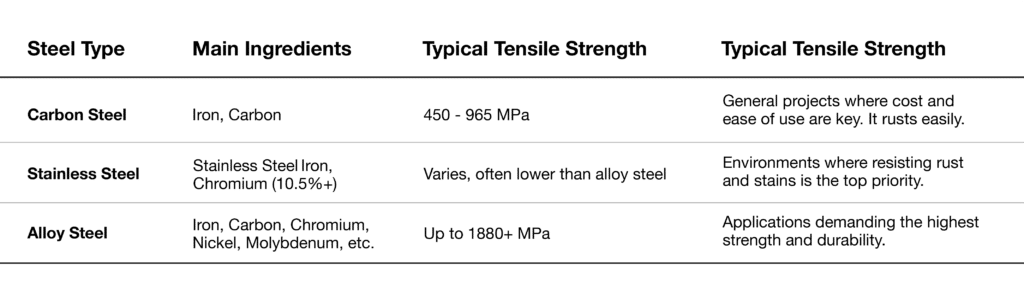
How does alloy steel compare to its common cousins? Let’s look at a clear comparison.
As the table shows, alloy steel is the clear champion for pure strength. While carbon steel is affordable and stainless steel fights corrosion, alloy steel is built to handle the most force.
More Than Just Strength: Other Key Properties
The added elements give alloy steel other useful qualities:
- Better Corrosion Resistance: Chromium not only adds strength but also helps fight rust. This makes some alloy steels suitable for pipelines or parts in damp or chemical-heavy places.
- Enhanced Toughness: Through special heat treatment, alloy steel can be made very tough. Toughness is the ability to absorb energy and resist cracking. This is crucial for parts like crankshafts in car engines that face constant shock and vibration.
Where Is High-Strength Alloy Steel Used?
Because of its unique combination of properties, alloy steel is vital in many demanding industries:
- Aerospace: It’s used in critical parts like landing gear and engine mounts, where failure is not an option.
- Construction: Its high strength-to-weight ratio helps build taller skyscrapers and longer, safer bridges.
- Automotive & Transport: Key components like axles, driveshafts, and suspension systems rely on alloy steel for strength and fatigue resistance.
- Industrial Machinery: From massive crane hooks to the gears inside a transmission, alloy steel handles heavy loads and constant friction.
- Oil & Gas: Drilling equipment, pipelines, and offshore platforms use it because it can withstand extreme pressure and harsh, corrosive environments.
Is Alloy Steel the Right Choice for You?
Alloy steel reigns supreme in the world of strong metals. Its carefully tuned blend of elements gives it unmatched strength, hardness, and durability. It is the material that builds our modern world, from the cars we drive to the bridges we cross.
However, it’s important to remember that this performance comes at a higher cost than carbon steel. Getting the perfect properties often requires precise and expensive heat treatment. You should choose alloy steel when your project’s success depends on exceptional strength and reliability.
Build Your Vision with the Right Materials
Choosing the right material is the first step to a successful project. At zone3Dplus, we provide more than just information—we provide solutions. Our advanced manufacturing services and extensive material library let you harness the power of high-performance materials like alloy steel.
Whether you need strong, functional prototypes or end-use parts that can withstand real-world stress, our expertise in 3D printing and custom manufacturing helps turn your vision into reality. Let’s build something strong together.
Multi Material 3D Printing: Reduce Waste Effectively
If you are researching a tool changer 3D printer, you are probably trying to solve one of two problems: printing...
Multi Material 3D Printing: How to Choose the Right Process for Functional Parts
Multi material 3D printing is changing how teams build prototypes and end-use parts. Instead of treating a printed part as...
Multi Color 3D Printer vs Full-Color 3D Printing Service: Which Is Better for Your Project?
A multi color 3D printer is one of the most searched topics in consumer and professional 3D printing right now....