
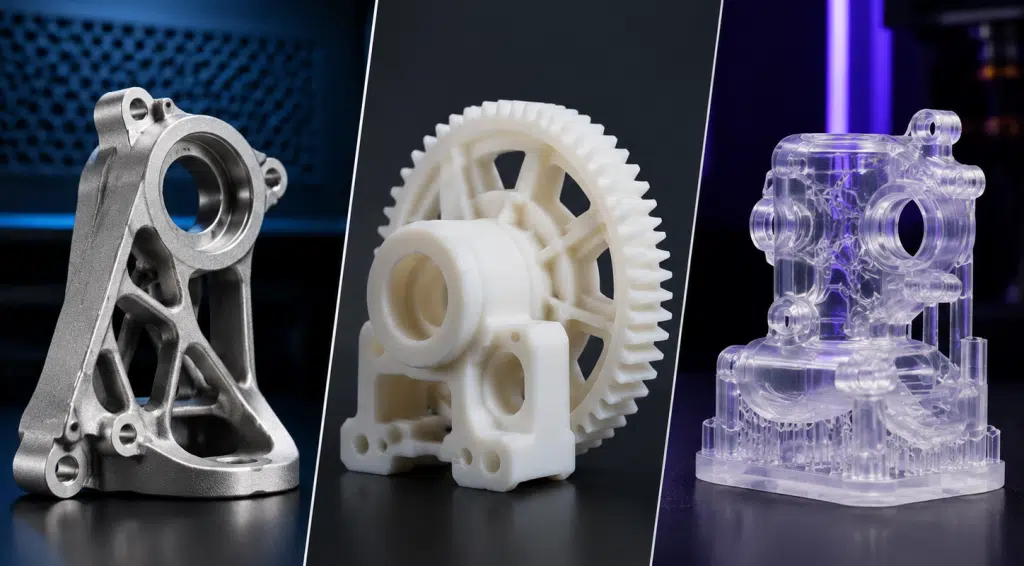
Choosing the right 3D printing material is one of the most important decisions in any functional part project. A good design can still fail if the material cannot handle the load, temperature, wear, flexibility, or surface requirements of the final application.
For B2B buyers, the question is usually not “which material is the strongest?” The better question is: what does this part need to do?
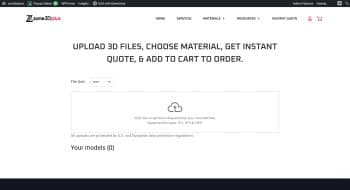
At zone3Dplus, customers can choose from metal and plastic 3D printing materials through processes such as SLM, SLA, SLS, MJF, PolyJet, and Binder Jetting. The platform supports online file upload, instant quote or RFQ support, DFM analysis, material selection, finishing options, and no minimum order quantity for 3D printing projects.
Below is a practical guide to choosing the right material for functional parts.
Start With the Part’s Job
Before choosing a material, define the part’s working conditions.
Ask these questions:
- Does the part need high strength or low weight?
- Will it face heat, moisture, chemicals, or outdoor use?
- Does it need flexibility, impact resistance, or wear resistance?
- Is the part for testing, tooling, assembly, or end use?
- Does the surface need machining, polishing, tapping, painting, or anodizing?
- How many parts do you need now, and how many later?
These answers help narrow the material choice quickly. For example, a lightweight drone bracket may need aluminum. A surgical guide or high-strength implant-style prototype may need titanium. A flexible seal may need TPU. A durable housing or fixture may be better in nylon.
Titanium 3D Printing Service: Best for High Strength and Low Weight
A titanium 3D printing service is often used when the part needs strength, corrosion resistance, and low weight at the same time. Titanium Ti6Al4V is a common choice for aerospace, medical, robotics, motorsport, and high-performance engineering projects.
Titanium makes sense when the part needs:
- High strength-to-weight ratio
- Good corrosion resistance
- Biocompatibility-related use cases
- Heat resistance
- Complex geometry that is difficult to machine
- Lightweight structures, brackets, mounts, or custom components
For SLM metal 3D printing, titanium can be useful when the design includes internal channels, lattice structures, thin walls, or organic shapes. These geometries can be expensive or impossible to make with traditional CNC machining alone.
The trade-off is cost. Titanium is usually more expensive than aluminum or stainless steel, so it should be chosen when its performance benefits matter.
Aluminum 3D Printing Service: Best for Lightweight Functional Parts
An aluminum 3D printing service is a strong option for lightweight parts that still need useful mechanical performance. Aluminum AlSi10Mg is commonly used in SLM printing for functional prototypes, housings, brackets, heat-related parts, drone components, automotive prototypes, and industrial fixtures.
Choose aluminum when you need:
- Low weight
- Good strength for its weight
- Heat dissipation
- Functional prototypes close to production behavior
- Custom housings, brackets, mounts, or lightweight structures
- Post-processing such as sandblasting, polishing, tapping, machining, or anodizing
Aluminum is often a better choice than titanium when the part does not need extreme strength or corrosion resistance. It is also useful when engineers want to test a lightweight metal component before deciding whether to move into CNC machining, casting, or low-volume manufacturing.
At zone3Dplus, aluminum 3D printed parts can be paired with finishing options such as bead blasting, polishing, anodizing, tapping, and partial machining depending on the project requirement.
Stainless Steel 3D Printing: Best for Durable Industrial Components
Stainless steel 3D printing is a practical choice for strong, durable, corrosion-resistant metal parts. Stainless Steel 316L is often used for industrial components, tooling, brackets, fluid-related parts, medical tools, marine parts, and heat-resistant prototypes.
Choose stainless steel when the part needs:
- Good strength and durability
- Corrosion resistance
- Heat resistance
- Better cost control than titanium
- Functional testing in a metal material
- Post-processing such as polishing, tapping, welding, heat treatment, or machining
Stainless steel is often a safe first choice for metal functional parts because it balances performance, availability, and cost. It may not be as light as aluminum or titanium, but it performs well in many industrial environments.
For parts that need complex geometry, SLM stainless steel printing can reduce the need for multi-part assemblies. A design with internal channels or difficult-to-machine features may be printed as one part, then post-machined in critical areas.
Nylon 3D Printing Service: Best for Durable Plastic Parts
A nylon 3D printing service is usually the best starting point for functional plastic parts. Nylon 12, Nylon 6, and glass-filled nylon are widely used for SLS and MJF printing because they offer a strong balance of toughness, impact resistance, wear resistance, and lightweight performance.
Choose nylon when you need:
- Durable plastic prototypes
- Jigs and fixtures
- Snap-fit parts
- Housings and covers
- Lightweight brackets
- Gears, hinges, ducts, and assembly components
- Small-batch production without tooling
Nylon is often a better choice than resin when the part needs to survive handling, assembly, impact, or repeated use. SLS and MJF are especially useful because they do not require support structures, which allows complex shapes and nested batch production.
Glass-filled nylon can be chosen when the part needs extra stiffness. It is useful for fixtures, structural housings, and parts that need more rigidity than standard nylon.
TPU 3D Printing Service: Best for Flexible and Rubber-Like Parts
A TPU 3D printing service is used when a part needs flexibility, shock absorption, grip, or compression. TPU and TPU-like resins are useful for gaskets, seals, soft grips, protective covers, wearable components, vibration dampers, flexible joints, and soft robotics parts.
Choose TPU when the part needs:
- Rubber-like flexibility
- Impact absorption
- Wear resistance
- Soft-touch surfaces
- Compression or bending
- Custom seals, pads, grips, or protective parts
TPU is not the right material for every flexible part. Wall thickness, shore hardness, geometry, and loading direction matter. A thin TPU part may flex easily, while a thick TPU part can feel much stiffer. For this reason, DFM feedback is useful before production.
zone3Dplus supports flexible material projects through 3D printing workflows that help buyers compare TPU, TPE, flexible resin, and other elastic material options based on part detail, flexibility, finish, and quantity.
Quick Material Selection Guide
How zone3Dplus Helps Buyers Choose the Right Material
Material selection is not only about the material name. The process, geometry, wall thickness, tolerance, finish, and end use all affect the final result.
zone3Dplus helps customers compare options through a practical workflow:
- Upload STL, STP, or STEP files
- Choose 3D printing technology, material, finish, and quantity
- Get instant quote or RFQ support
- Receive DFM analysis when needed
- Confirm production for one prototype or a small batch
Because zone3Dplus also supports CNC machining, vacuum casting, and low-volume manufacturing, buyers can compare more than one manufacturing route. A project may start with nylon 3D printing for fit testing, move to aluminum or stainless steel for functional validation, and later use CNC or low-volume production when the design is stable.
Final Thoughts
The right 3D printing material depends on the job of the part.
Choose titanium when strength-to-weight performance matters. Choose aluminum when you need a lightweight metal part with good practical performance. Choose stainless steel when durability and corrosion resistance matter. Choose nylon when you need a tough plastic functional part. Choose TPU when flexibility, grip, or shock absorption is the goal.
For engineering teams and procurement buyers, the safest approach is to match the material to the real working conditions before production begins.
What Files Do You Need for a 3D Printing Quote?
Getting a fast and accurate 3D printing quote starts with one thing: the right file.A good 3D file helps the...
How 3D Printing Helps Reduce Prototype Lead Time
Prototype delays rarely come from one big problem. More often, they come from several small delays stacked together: waiting for...
How to Choose the Right 3D Printing Material for Functional Parts
Choosing the right 3D printing material is one of the most important decisions in any functional part project. A good...