
Prototype delays rarely come from one big problem. More often, they come from several small delays stacked together: waiting for a supplier to quote, waiting for tooling, waiting for machining setup, waiting for material approval, then waiting again when the first part needs changes.
For product teams, engineering departments, and procurement buyers, time lost during prototyping can delay testing, customer feedback, investor demos, certification planning, and production decisions.
This is why many companies now use a professional rapid prototyping service before moving into tooling or mass production.
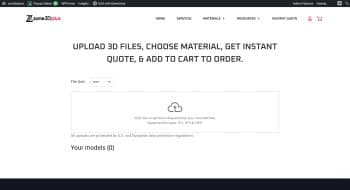
At zone3Dplus, customers can upload STL, STP, or STEP files, choose technology, material, finish, and quantity, then get an instant quote or RFQ support for 3D printing, CNC machining, vacuum casting, and low-volume manufacturing.
Why Traditional Prototyping Takes Time
Traditional prototype manufacturing can be effective, but it often involves long setup steps.
A machined prototype may need programming, fixture setup, material sourcing, and several rounds of manual communication. A molded prototype may need tooling before the first usable part exists. If the design changes, the process often starts again.
That is manageable for mature products, but it can slow down early development.
During prototyping, teams usually need to test questions such as:
- Does the part fit the assembly?
- Is the wall thickness right?
- Are the mounting points correct?
- Does the housing feel right in hand?
- Can the bracket handle the load?
- Does the material behave as expected?
- Should the next version be lighter, stronger, or easier to assemble?
3D printing helps answer these questions faster because it produces parts directly from digital files.
3D Printing Removes the Tooling Step
One of the biggest lead-time advantages of 3D printing is simple: no tooling is required.
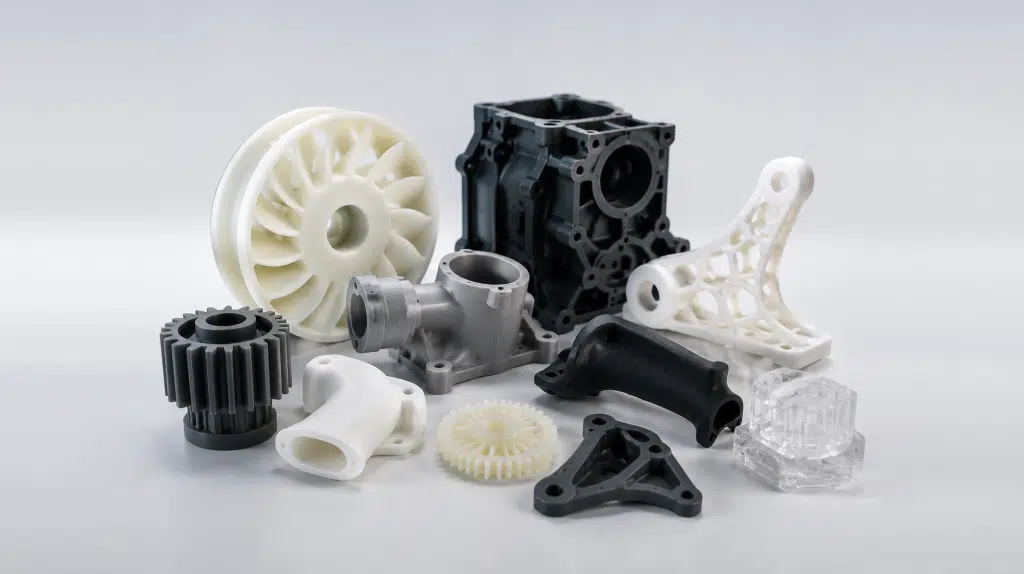
Instead of waiting for molds, dies, or production fixtures, teams can print prototypes directly from CAD data. This makes 3D printing useful for early product development, custom fixtures, functional test parts, housings, brackets, medical models, drone parts, robotics components, and low-volume pilot runs.
With industrial 3D printing services, buyers can choose from different processes based on the part’s purpose:
- SLA for smooth visual prototypes
- SLS for durable nylon parts
- MJF for repeatable nylon batches
- PolyJet for full-color or multi-material models
- SLM / DMLS for functional metal prototypes
- Binder Jetting for selected production applications
Because the setup is digital, design changes are easier to handle. A team can print version one, test it, update the CAD file, and order version two without changing a mold.
Instant Quotes Shorten the First Step
The quoting stage is often underestimated.
If a team waits two or three days just to get pricing, the project is already behind before production begins. That delay becomes worse when the buyer needs to compare different materials, quantities, and finishing options.
An online 3D printing service helps reduce this delay.
zone3Dplus provides an instant quote workflow where customers can upload 3D files, select the process, material, finish, and quantity, then review pricing and lead time online. For projects that need more review, RFQ support and DFM analysis are available.
This means engineering and procurement teams can compare options earlier, instead of waiting for long email threads.
A fast 3D printing quote is especially useful when comparing:
- One prototype vs. small batch
- Resin vs. nylon
- Plastic vs. metal
- SLA vs. SLS or MJF
- Aluminum vs. stainless steel or titanium
- As-printed finish vs. polished or machined features
Better quoting speed leads to faster decisions.
Faster Iteration Means Better Products
Prototype speed is not only about making the first part quickly. The real value comes from faster iteration.
Most products are not perfect after one prototype. A clip may need more flexibility. A duct may need better airflow. A cover may need different clearances. A metal bracket may need less weight. A customer-facing model may need better surface finish.
When each revision takes weeks, teams make fewer changes. When each revision can be made faster, teams test more ideas and catch problems earlier.
This is where a custom 3D printed parts manufacturer can support the full development cycle. zone3Dplus can produce one-off prototypes, functional parts, small batches, replacement parts, and low-volume production components in different materials and technologies.
For B2B buyers, this reduces risk before tooling. Instead of guessing whether a design is ready, teams can validate it with real parts.
Material Choice Also Affects Lead Time
Choosing the right material early can prevent rework.
A visual prototype does not need the same material as a functional test part. A part used for assembly review may work well in SLA resin. A part used for repeated handling may need SLS or MJF nylon. A high-strength test component may need aluminum, stainless steel, or titanium through metal 3D printing.
zone3Dplus supports over 30 metal and plastic materials, including resins, nylon, TPU, stainless steel 316L, aluminum AlSi10Mg, titanium Ti-6Al-4V, Inconel 625, and more.
The right material helps teams avoid unnecessary repeat orders. If the first part is close to the real application, testing becomes more useful.
DFM Review Helps Avoid Failed Builds
Speed should not mean skipping manufacturability review.
A 3D model may look fine on screen but still have thin walls, fragile features, unsupported details, wrong units, or geometry that needs adjustment before printing.
zone3Dplus supports DFM analysis and printability review for projects that need it. This helps catch problems before manufacturing begins.
Common issues include:
- Walls that are too thin
- Small holes or text that will not print cleanly
- Sharp internal corners
- Unsupported features
- Incorrect units
- Poor orientation for strength or surface finish
- Features that need post-machining
Catching these issues early can save more time than rushing a bad file into production.
From Prototype to Low-Volume Production
Many teams use 3D printing first, then decide what comes next.
If the prototype confirms the design, the project may move to low-volume production, CNC machining, vacuum casting, or tooling. If the quantity stays low or the geometry is complex, 3D printing may remain the best production method.
zone3Dplus supports this path by offering 3D printing, CNC machining, vacuum casting, hybrid manufacturing, and low-volume manufacturing under one workflow. Buyers can start with one prototype and scale to small batches when ready.
This is useful for:
- Product development teams
- Industrial equipment manufacturers
- Robotics and automation companies
- Aerospace and drone projects
- Medical and lab device teams
- Consumer electronics developers
- Startups preparing pilot production
Final Thoughts
3D printing helps reduce prototype lead time because it removes tooling, speeds up quoting, supports fast design changes, and allows teams to test real parts earlier.
For companies that need functional prototypes, custom parts, short runs, or fast design validation, a professional rapid prototyping service can make the development process more practical.
zone3Dplus supports B2B customers with online quoting, DFM review, metal and plastic 3D printing, CNC machining, vacuum casting, and low-volume manufacturing.
What Files Do You Need for a 3D Printing Quote?
Getting a fast and accurate 3D printing quote starts with one thing: the right file.A good 3D file helps the...
How 3D Printing Helps Reduce Prototype Lead Time
Prototype delays rarely come from one big problem. More often, they come from several small delays stacked together: waiting for...
How to Choose the Right 3D Printing Material for Functional Parts
Choosing the right 3D printing material is one of the most important decisions in any functional part project. A good...