PEEK Plastic: The High-Performance Material

Polyether Ether Ketone (PEEK) is a top-tier engineering plastic. It stands out for its exceptional strength and outstanding temperature resistance. This material works well in very tough conditions where many other plastics or even metals might fail.

In short, PEEK is a go-to material for demanding fields. These include aerospace, medical implants, and automotive engineering. This guide will explain everything about PEEK. We will cover its key features, available types, how to work with it, and why it often beats other materials.

What Exactly is PEEK Plastic?

PEEK is a high-performance thermoplastic from the polyaryletherketone (PAEK) family. It is a semi-crystalline polymer known for keeping its properties in extreme environments.

For example, it can handle temperatures up to 260°C (500°F) continuously. Moreover, it resists chemicals, wears well, and is very strong. These traits make it perfect for critical parts in planes, cars, and inside the human body.

Key Properties of PEEK: Why It's So Special

PEEK’s value comes from its unique mix of properties. Let’s break down its main features.

Physical & Mechanical Properties

  • Strength and Stiffness: It has a tensile strength of 90-100 MPa and is very rigid (flexural modulus of 3.7-4.0 GPa). This means it can handle heavy loads without bending or breaking.
  • Lightweight: With a specific gravity of 1.30 g/cm³, it is much lighter than metals. This helps reduce weight in vehicles and aircraft.
  • Dimensional Stability: It keeps its shape and size well under heat, pressure, and even in wet conditions.

Thermal Properties

  • High Heat Resistance: PEEK has a melting point of 343°C (649°F). It can be used continuously at temperatures up to 250°C (482°F) without losing its strength.
  • Low Thermal Expansion: It doesn’t expand or shrink much with temperature changes. This is crucial for making precise parts that must fit perfectly.


Electrical & Chemical Properties

  • Excellent Insulator: It has high dielectric strength and volume resistivity. This makes it great for electrical connectors and insulation.
  • Chemical Resistance: It stands up to a wide range of chemicals. These include strong acids, bases, oils, and fuels. So, it’s ideal for chemical processing equipment.
  • Flame Retardant: It naturally meets strict flame safety standards (UL 94 V-0). It also produces very little smoke or toxic gas if it burns.

Specialized Performance

  • Biocompatibility: Medical-grade PEEK is FDA-approved for long-term implantable devices. It is also safe to sterilize repeatedly.
  • Wear and Radiation Resistance: It has a low friction coefficient and resists wear. It also holds up against gamma and X-ray radiation.

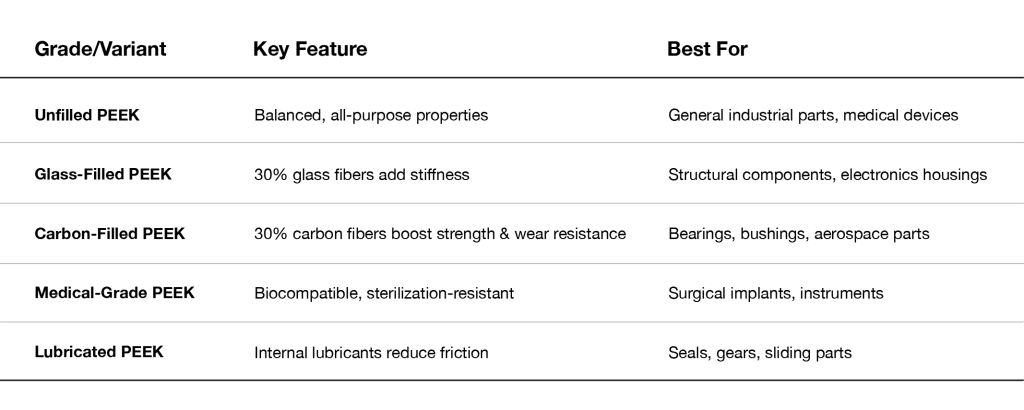
Different Grades of PEEK for Different Needs

PEEK comes in several variants, each designed for specific challenges. Here’s a quick look:

zone3Dplus

How is PEEK Plastic Processed and Manufactured?

You can shape PEEK using several methods. The best choice depends on your part’s design and use.

  • Injection Molding: This is the most common method for mass production. It makes complex, high-precision parts with a great finish. It’s used for things like automotive sensors and medical device components.
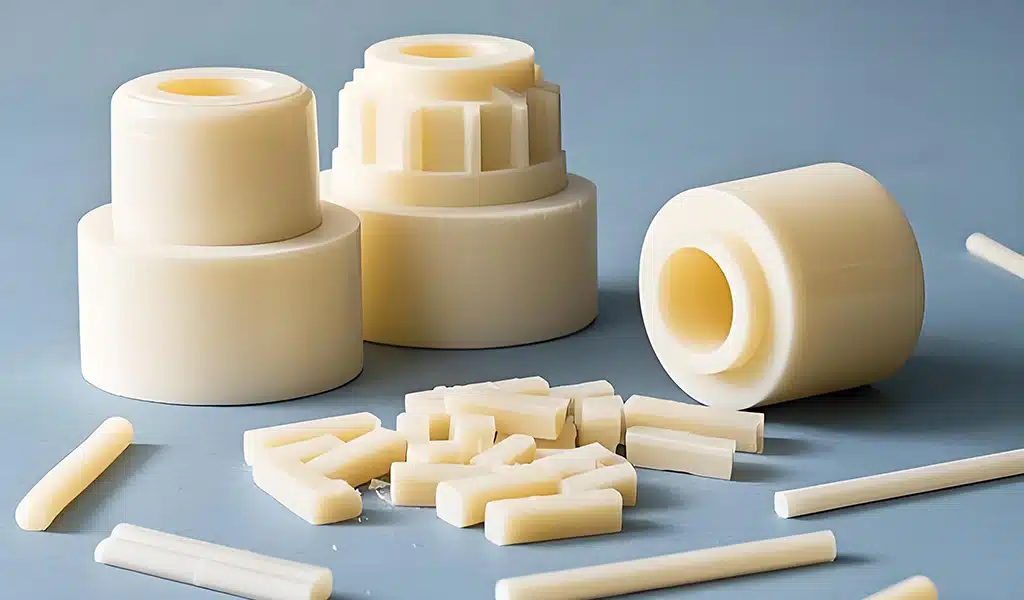
  • CNC Machining: You can accurately cut PEEK stock (rods, sheets) into final parts. This is perfect for prototypes or parts that need very tight tolerances.
  • 3D Printing (Additive Manufacturing): Technologies like FDM/FFF can print PEEK filament. This allows for complex, custom geometries with less waste. It’s excellent for prototyping, custom medical guides, and lightweight aerospace parts.

This is where services like zone3Dplus add tremendous value. Working with PEEK, especially in 3D printing, requires expert knowledge and high-performance equipment. zone3Dplus specializes in advanced additive manufacturing, offering the expertise and technology needed to successfully produce strong, heat-resistant PEEK parts for prototyping and end-use applications.

  • Extrusion: This process creates continuous shapes like tubes, rods, and sheets. These can then be used for machining or as insulation.
  • Compression Molding: This method is good for making very large or thick-walled parts.

PEEK vs. Other High-Performance Plastics

How does PEEK compare to other tough plastics? Let’s see.

PEEK vs. ULTEM (PEI):

  • Heat: PEEK handles higher continuous temperatures (up to 260°C) than ULTEM (~217°C).
  • Strength & Chemicals: PEEK is generally stronger and more chemically resistant.
  • Cost & Ease of Use: ULTEM is less expensive and can be easier to 3D print.

PEEK vs. PEKK:

  • Performance: They are very similar. PEKK sometimes has a slight edge in certain high-temperature or crystallization properties.
  • 3D Printing: PEKK is often considered slightly easier to print with good layer adhesion.
  • Choice: The best pick often depends on the specific application and manufacturing process.

Things to Consider When Using PEEK

Despite its advantages, PEEK has some challenges:

  • High Cost: The raw material and the specialized equipment needed to process it are expensive.
  • Difficult to Process: It requires very high temperatures (near 400°C) to melt and shape. This needs robust machines and expert skill.
  • Machining Challenges: Its toughness can make it hard to machine. It requires sharp tools and proper techniques.
  • Sustainability: Recycling PEEK is difficult due to its high melting point and risk of quality loss.

Leading PEEK Brands in the Market

Several companies produce high-quality PEEK:

  • Victrex: The most well-known brand, offering a wide range of grades.
  • Solvay: Makes KetaSpire PEEK and the modified AvaSpire line.
  • Evonik: Known for its VESTAKEEP brand, especially for medical uses.
  • Ensinger: Supplies TECAPEEK in various stock shapes for machining.
  • Röchling: Produces SustaPEEK for industrial and food-grade applications.

Conclusion: Is PEEK Right for Your Project?

In conclusion, PEEK plastic is a superstar material for extreme engineering. Its incredible heat resistance, strength, and stability make it irreplaceable in many high-tech industries.

When should you choose PEEK?

  • When your part faces very high temperatures or harsh chemicals.
  • When you need a strong, lightweight metal alternative.
  • When biocompatibility is essential for medical implants.
  • When you need a durable, wear-resistant material for moving parts.

For projects that need the unique benefits of PEEK—especially in complex or custom designs—partnering with a specialized service is key. zone3Dplus provides expert 3D printing and manufacturing services that can help you navigate the challenges of using PEEK. They can turn this high-performance material into a precise, reliable part for your most demanding applications.

Scroll to Top