Smart Infill: The Secret to Stronger, Lighter 3D Prints

Ever wonder why some 3D printed parts are incredibly strong yet surprisingly light? The secret is not in the outer shell, but what’s inside. This internal structure is called infill, and it’s a game-changer for making parts that use less material, print faster, and perform better.

Think of infill like the skeleton inside a building. You don’t need solid concrete from floor to ceiling to make a sturdy structure. A smart, internal framework provides immense strength while saving a huge amount of material. In 3D printing, infill does exactly that. It fills the inside of your print with a patterned lattice, creating a perfect balance between durability, weight, and cost.

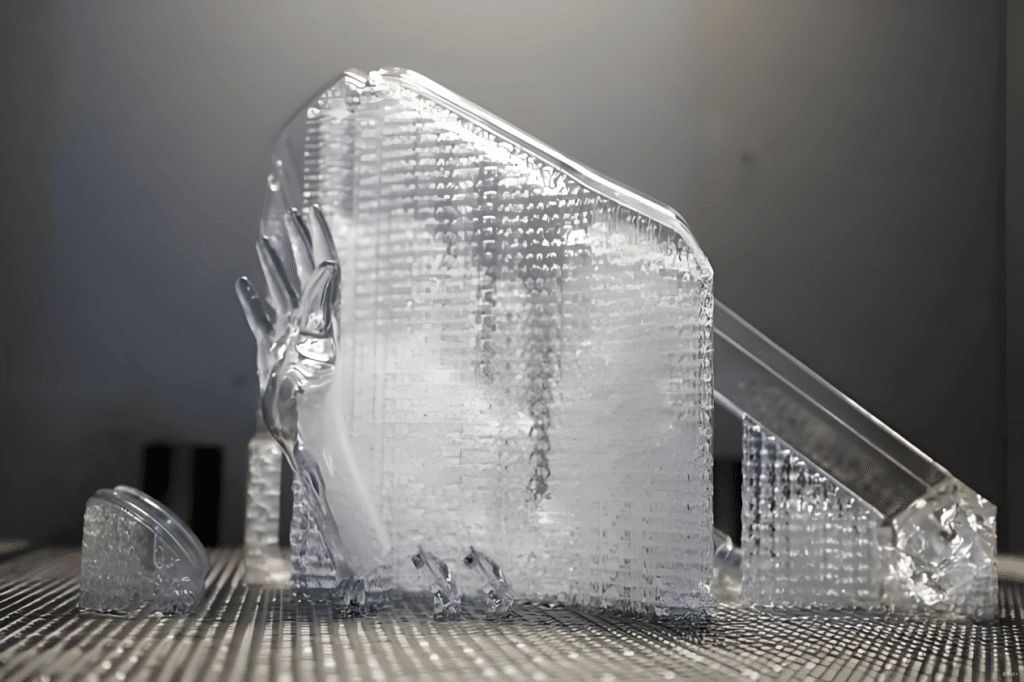
zone3Dplus part

What Exactly is 3D Printing Infill?

Infill is the supportive internal structure inside a 3D printed object. Instead of printing objects completely solid, a 3D printer lays down a specific pattern inside the empty space between the outer walls. This pattern, which you often can’t see from the outside, is what gives the part its core strength.

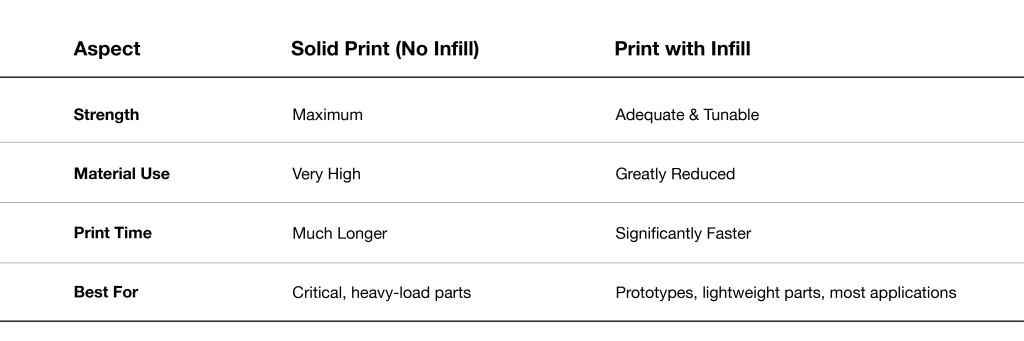
Choosing the right infill is about finding the best balance. Here’s a quick look at the main choice you have:

zone3Dplus comparison table

As you can see, using infill is almost always the smarter choice. It saves you time and material while still giving you a part that is perfectly strong for its job. Experts at zone3Dplus emphasize that smart infill strategy is the first step toward professional, efficient printing, helping both hobbyists and engineers optimize their projects from the inside out.

Popular Infill Patterns and How to Choose

Not all infill is the same. Different patterns offer different benefits. Let’s break down the most common ones:

  • Rectilinear/Grid: This is the simple, reliable choice. It’s a basic grid of straight lines that provides good strength in all directions and prints very quickly. It’s a great, no-fuss option for everyday prints.
  • Honeycomb: Inspired by nature, this hexagonal pattern is famous for its excellent strength-to-weight ratio. It’s incredibly efficient, using minimal material to provide maximum support, making it ideal for strong, lightweight functional parts.
  • Triangular: This pattern uses interconnected triangles, creating a very stiff and stable structure. It’s fantastic for parts that need to resist bending or twisting.
  • Gyroid: This is a more advanced, wavy pattern that looks complex. It provides great strength in all directions while also allowing for some flexibility. It’s a top choice for high-performance applications.

So, how do you pick? Start with your goal. For a quick draft model, a low-density grid is fine. For a strong drone part, choose honeycomb or triangular. For a unique, flexible item, try gyroid. zone3Dplus often recommends experimenting with different patterns in sample cubes to literally feel the difference in strength and flexibility before committing to a large print.

The Clear Benefits: Why You Should Always Use Infill

Understanding infill leads to better prints. Here are the key advantages:

1.Stronger Parts: A good infill pattern spreads stress throughout the entire object, preventing cracks and breaks. It acts like an internal reinforcement.

2.Major Material Savings: This is a huge cost saver. Filling a model 100% solid uses many times more plastic or resin than a 20% infill, which is often strong enough.

3.Lighter Weight: Less material inside naturally means a lighter final product. This is critical for industries like aerospace and automotive, where every gram counts, and for everyday items like wearable gadgets.

4.Much Faster Prints: Since the printer head doesn’t have to cover every single millimeter inside the part, print times can drop dramatically. What might take 10 hours solid could be done in 3 hours with infill.

Where is Smart Infill Used? Everywhere!

The use of advanced infill is transforming industries:

  • Aerospace & Automotive: Companies use complex infill to create brackets, ducts, and other components that are as strong as metal but a fraction of the weight, improving fuel efficiency.
  • Medical Field: Custom prosthetics and surgical guides are printed with specific infills to be lightweight for patient comfort yet durable for everyday use. zone3Dplus provides specialized printing services for medical prototypes, where precision and internal structure integrity are non-negotiable.
  • Consumer Products: From strong-but-light bike helmets to customized tool handles, infill allows for durable products that are pleasant and efficient to use.

The Cutting Edge: Next-Level Infill Techniques

Technology is making infill even smarter. Here’s what’s new:

  • Variable Density Infill: Why use one setting for the whole part? Advanced software lets you make areas of high stress (like screw holes) dense and solid, while other areas stay light. This maximizes strength exactly where needed.
  • Adaptive & Smart Algorithms: New slicing software can analyze your 3D model and automatically generate the most efficient infill pattern for its shape, saving you time and material without guesswork.
  • Multi-Material Infill: Imagine an object that’s rigid on the outside but has a slightly flexible, shock-absorbing infill inside. This is now possible, opening doors for incredibly innovative product designs.

Your Quick Guide to Getting Started

Feeling ready to master infill? Follow these tips:

  • Don’t Go 100%: For most prints, an infill density between 15% and 30% is perfect. Start at 20% and adjust from there.
  • Match the Pattern to the Job: Use Grid for drafts, Honeycomb for strong lightweight parts, and Gyroid for all-around performance.
  • Use Variable Settings: If your slicing software has it, try variable density to reinforce specific points like pegs or mounting points.
  • Experiment and Learn: Print small test blocks with different infills and break them. It’s the best way to understand how they work.

Build Smarter from the Inside Out

Infill is much more than just filling space; it’s the core principle of intelligent, efficient 3D printing. By moving beyond the simple idea of “solid vs. hollow,” you unlock the true potential of your printer—creating parts that are engineered for performance.

Whether you’re a hobbyist printing a new gadget or an engineer prototyping a critical component, taking control of your infill is the key to better results. For projects where internal excellence is paramount, partnering with experts like zone3Dplus can ensure your designs are not just printed, but engineered from the inside out for optimal strength, weight, and functionality.

Scroll to Top