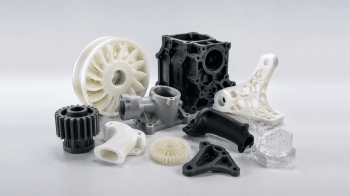
Multi material 3D printing is changing how teams build prototypes and end-use parts. Instead of treating a printed part as one uniform object, multi-material workflows allow designers to combine different properties in one product: rigid and flexible zones, clear and opaque regions, soft-touch surfaces, soluble supports, or color-coded features.
This matters because real products are rarely made from one material. A wearable device may need a rigid housing and flexible contact points. A medical model may need hard bone, soft tissue, and color-coded anatomy. A product prototype may need transparent windows, rubber-like buttons, and a smooth cosmetic shell.
The challenge is choosing the right process. Not every “multi material 3D printing” method offers the same accuracy, strength, surface finish, or material behavior.
What Is Multi Material 3D Printing?
Multi material 3D printing means producing a part or assembly using more than one material or material property. This can happen in several ways:
- Printing multiple materials in the same build
- Printing separate parts in different materials for assembly
- Using one material for the part and another for support
- Combining rigid, flexible, transparent, or colored materials
- Using metal and plastic processes across a larger product workflow
Some systems combine materials directly. Other workflows create a multi-material product by printing components separately and assembling them after finishing.
Why Multi Material 3D Printing Matters
Multi-material printing helps bridge the gap between a concept model and a working prototype. It can reduce the need for tooling, simplify assembly, and make prototypes easier to test with real users.
Key benefits include:
- Better functional prototypes
- Faster design validation
- More realistic product samples
- Fewer separate manufacturing steps
- Improved communication with clients and stakeholders
- Ability to test material behavior earlier
For example, a product team can test a rigid enclosure, flexible seal, and transparent display cover before committing to injection molding. A medical team can review an anatomical model with different visual and tactile zones. An engineering team can validate a design using strong nylon-like materials before production.
Main Technologies Used for Multi Material 3D Printing
The best process depends on whether you care most about appearance, mechanics, material range, or production speed.
PolyJet 3D Printing
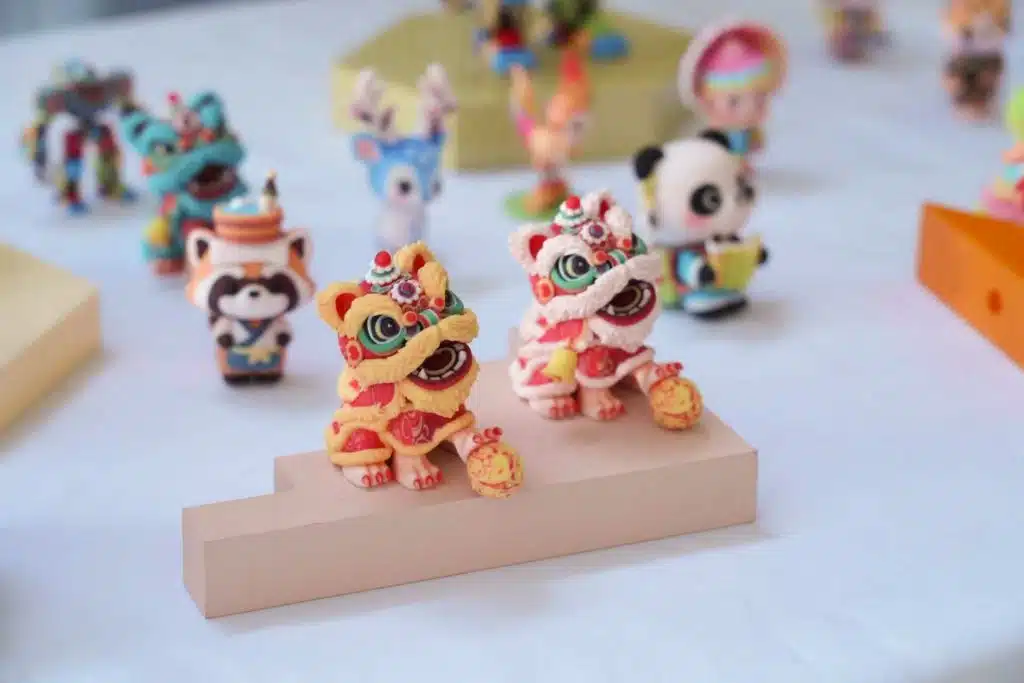
PolyJet is one of the most capable processes for detailed multi-color and multi-material visual models. It can create smooth surfaces, fine details, and realistic prototypes. It is often used for product design, medical models, consumer goods, and presentation models.
Choose PolyJet when:
- Appearance and detail are critical
- You need color or material variation
- The model is for presentation, review, or fit testing
- Surface smoothness matters
FDM with Multiple Materials
FDM systems can use multiple filaments through AMS-style systems, dual extruders, or tool changers. They are useful for basic multi-color parts, soluble supports, and simple combinations of rigid and flexible materials.
Choose FDM-style multi-material printing when:
- You need quick concept models
- The geometry is not extremely detailed
- Layer lines are acceptable
- You want to test low-cost material combinations
SLS and MJF
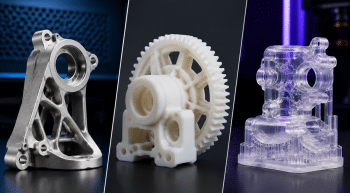
SLS and MJF are not usually thought of as multi-material processes in the same way as PolyJet, but they are excellent for functional plastic parts. If your final product requires strength, durability, and repeatability, it may be better to print separate components in the right engineering materials and assemble them.
Choose SLS or MJF when:
- You need durable nylon-like parts
- Geometry is complex
- You need small-batch production
- Mechanical performance matters more than color
SLA and FDM
SLA and FDM is strong for high-detail resin parts, smooth surfaces, and visual prototypes. It is not always the best direct multi-material process, but it is useful when you need precise, smooth components that can be finished or assembled with other printed parts.
Choose SLA or FDM when:
- You need high detail
- The surface must be smooth
The part is a visual model, master pattern, or fit-check component
SLM and Metal 3D Printing
SLM is used for metal parts with complex geometry. It is not the same as desktop multi-material printing, but it can be part of a multi-material product strategy when metal components are combined with plastic housings, inserts, fixtures, or assemblies.
Choose SLM when:
- You need metal strength or heat resistance
- The part has complex geometry
- Traditional machining would be slow or expensive
- The component is functional, not just visual
Multi Material 3D Printing Design Tips
To get better results, design for the process from the beginning.
- Define the purpose of each material.
Do not add material variation only because it is possible. Each material should have a job: strength, flexibility, color, transparency, support, grip, insulation, or visual communication.
- Separate functional zones clearly.
If a part needs rigid and flexible areas, make those zones clear in the CAD model. Ambiguous transitions can create manufacturing risk.
- Confirm tolerance needs.
Different materials and technologies behave differently. A flexible feature and a rigid housing may not hold the same tolerance.
- Consider assembly.
Sometimes the best multi-material result comes from printing separate parts and assembling them. This may improve strength, finish, and cost.
- Ask for DFM feedback early.
A design that looks good on screen may need changes before printing. Wall thickness, unsupported details, small text, and mating features should be checked before production.
How zone3Dplus Supports Multi Material 3D Printing Projects
zone3Dplus is useful for multi-material projects because it offers multiple 3D printing technologies under one service workflow. Instead of forcing every design into one process, you can choose from SLA, SLS, MJF, SLM, and PolyJet depending on the part requirement.
The service is especially helpful when:
- You need both plastic and metal parts
- You are comparing several material options
- You need prototype and production support
- You want DFM review before manufacturing
- You need no-MOQ flexibility for one-off or small-batch parts
- You need large-format plastic parts or detailed multi-color PolyJet parts
This process-based approach is often more practical than buying a single multi-material printer. One machine rarely covers every requirement. A service platform gives you access to multiple processes without machine ownership.
Multi Material 3D Printing: Best Use Cases
Multi-material workflows are especially valuable for:
- Product development prototypes
- Consumer electronics housings
- Wearable device models
- Medical and dental models
- Automotive components
- Fixtures and jigs
- Robotic grippers
- Soft-touch product samples
- Transparent display prototypes
- Metal-plastic assemblies
Final Recommendation
Multi material 3D printing is not one technology. It is a design and manufacturing strategy. The best result comes from matching each part requirement to the right process, material, and finishing method.
If your project needs only simple color changes, a desktop multi color 3D printer may work. If it needs strength, detail, multiple materials, metal options, or professional finishing, a service-based workflow is usually more reliable.
Multi Material 3D Printing: Reduce Waste Effectively
If you are researching a tool changer 3D printer, you are probably trying to solve one of two problems: printing...
Multi Material 3D Printing: How to Choose the Right Process for Functional Parts
Multi material 3D printing is changing how teams build prototypes and end-use parts. Instead of treating a printed part as...
Multi Color 3D Printer vs Full-Color 3D Printing Service: Which Is Better for Your Project?
A multi color 3D printer is one of the most searched topics in consumer and professional 3D printing right now....