
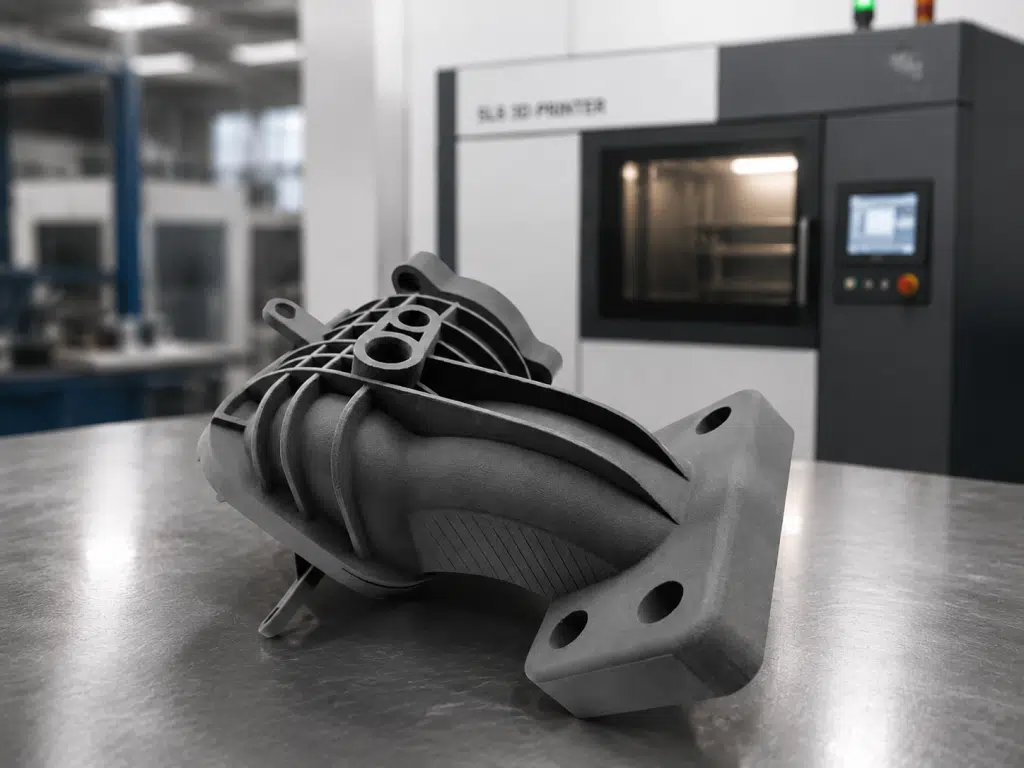
Nylon is one of the most useful materials in professional 3D printing. It is strong, lightweight, wear-resistant, and flexible enough for many functional parts. But when a buyer searches for a Nylon 3D printing service, one question often comes up quickly: should the part be printed with SLS or MJF?
Both SLS and MJF are powder bed 3D printing technologies. Both can make durable nylon parts without support structures. Both are widely used for prototypes, jigs, fixtures, housings, ducts, snap-fit parts, and low-volume production.
The best choice depends on your part geometry, required strength, surface finish, quantity, color, material options, and lead time.
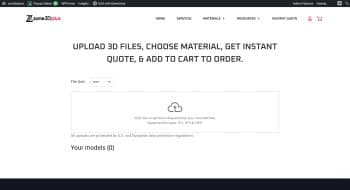
At zone3Dplus, customers can order nylon parts through an online 3D printing service workflow, upload STL, STP, or STEP files, choose technology, material, finishing, and quantity, then receive instant quote or RFQ support before production.
What Is SLS 3D Printing?
SLS stands for Selective Laser Sintering. It uses a laser to fuse nylon powder layer by layer inside a heated build chamber. Because the surrounding powder supports the part during printing, SLS can produce complex shapes without extra support structures.
For nylon parts, SLS is often chosen for:
- Functional prototypes
- Jigs and fixtures
- Small-batch production
- Complex internal channels
- Durable mechanical parts
- PA11, PA12, TPU, and glass-filled nylon applications
SLS is a strong option when material flexibility matters. If your project needs PA12, PA11, glass-filled nylon, or a larger build size, SLS may be the better fit.
What Is MJF 3D Printing?
MJF stands for Multi Jet Fusion. Instead of using a laser, MJF applies fusing and detailing agents onto nylon powder, then uses heat to fuse each layer. This process can be faster than SLS and is well suited for batch production.
MJF is often chosen for:
- High-volume nylon parts
- Thin-wall functional parts
- Snap-fit designs
- Ducts and housings
- Industrial prototypes
- Parts that need consistent strength across a batch
MJF parts are usually gray or black because of the fusing agent. They often have a smoother surface than standard SLS parts and can be efficient for dense batch layouts.
SLS vs MJF: Key Differences for Nylon Parts
For many buyers, the decision is not about which technology is “better.” It is about which one fits the part.
When SLS Is the Better Choice
Choose SLS when your nylon part needs material flexibility, larger build dimensions, or special material properties.
For example, SLS may be better if you need glass-filled nylon for extra stiffness, PA11 for toughness, TPU for flexibility, or a white nylon part that can be dyed after printing. It is also useful for custom jigs, fixtures, brackets, and functional prototypes where geometry is complex but the order quantity is not very high.
SLS is a good fit for a custom 3D printing service because it handles different shapes and part types well. If your design includes clips, channels, hinges, curves, or lightweight structures, SLS can often produce the part without extra tooling.
When MJF Is the Better Choice
Choose MJF when speed, repeatability, and batch efficiency matter more.
MJF is often a strong choice for companies ordering many nylon parts at once. It can pack many parts efficiently into one build, which helps reduce cost per part for suitable geometries. It also works well for thin-wall designs, snap fits, ducts, housings, and end-use nylon components that need consistent strength.
For industrial 3D printing services, this matters because buyers often need more than one prototype. They may need 20, 50, or 200 parts for testing, pilot production, or customer validation. MJF can be a practical option when the design is ready for a small production batch.
Which Process Should You Choose?
Use SLS if your project needs:
- More nylon material options
- Larger part size
- White or dyeable nylon parts
- Glass-filled nylon
- Flexible or specialized materials
- Strong custom prototypes or fixtures
Use MJF if your project needs:
- Faster nylon batch production
- Smooth functional parts
- Repeatable mechanical performance
- Thin walls or snap-fit features
- Cost-efficient small batches
- Gray or black end-use parts
If you are unsure, the safest route is to send your 3D file for manufacturability review. A small change in wall thickness, part orientation, feature size, or batch quantity can change which process makes more sense.
How zone3Dplus Supports Nylon 3D Printing Projects
zone3Dplus provides SLS, MJF, SLA, SLM, PolyJet, Binder Jetting, CNC machining, vacuum casting, and low-volume manufacturing services. For nylon parts, the team can help compare SLS and MJF based on your part’s function, quantity, material, tolerance, finish, and delivery schedule.
The process is straightforward:
- Upload your STL, STP, or STEP file
- Choose the printing technology, material, finish, and quantity
- Get instant quote or RFQ support
- Receive DFM feedback when needed
- Confirm the order and move into production
For B2B buyers, this saves time. Instead of guessing whether SLS or MJF is the better process, you can compare options through an online 3D printing service and get practical feedback before production starts.
Final Thoughts
SLS and MJF are both strong choices for nylon 3D printed parts. SLS is often better when you need material variety, larger parts, or custom functional prototypes. MJF is often better when you need fast, repeatable, cost-efficient nylon parts in small or medium batches.
For product teams, engineers, and procurement buyers, the goal is not to choose the most advanced process. The goal is to choose the process that makes the part work.
If your project needs nylon prototypes, functional components, jigs, fixtures, housings, or low-volume production parts, zone3Dplus can help you compare SLS and MJF before manufacturing begins.
What Files Do You Need for a 3D Printing Quote?
Getting a fast and accurate 3D printing quote starts with one thing: the right file.A good 3D file helps the...
How 3D Printing Helps Reduce Prototype Lead Time
Prototype delays rarely come from one big problem. More often, they come from several small delays stacked together: waiting for...
How to Choose the Right 3D Printing Material for Functional Parts
Choosing the right 3D printing material is one of the most important decisions in any functional part project. A good...