
Black Oxide Coating Explained: Your Complete Guide

Black oxide coating is a chemical process that gives metals a sleek black finish while protecting them from rust. This thin, low-cost layer boosts durability and aesthetic appeal across automotive, tools, and decorative hardware industries.

What Exactly Is Black Oxide Coating?

Black oxide coating is a popular finishing process for metals. Think of it like a special bath for metal parts. They get dipped into a chemical solution, which reacts with the surface to create a thin, protective black layer. This layer is not a paint or plating; it’s actually a form of iron oxide that bonds right into the metal itself. As a result, it offers a unique mix of corrosion resistance, improved grip, and a professional matte look without making the part any thicker.

How the Process Works

The magic happens in a few key steps:

1.Cleaning: First, the metal part is thoroughly cleaned to remove any oil, dirt, or grease.

2.The Black Oxide Bath: Next, it’s dipped into a hot (for most industrial uses) chemical solution. The chemicals react with the iron in the metal to form magnetite (Fe₃O₄), which gives it that signature black color.

3.Rinsing: The part is then rinsed to stop the chemical reaction.

4.Sealing (Crucial Step): Finally, and very importantly, the part is sealed with oil or wax. This last step locks in the coating, greatly enhances corrosion protection, and gives the surface a slight sheen.

The Three Main Types of Black Oxide

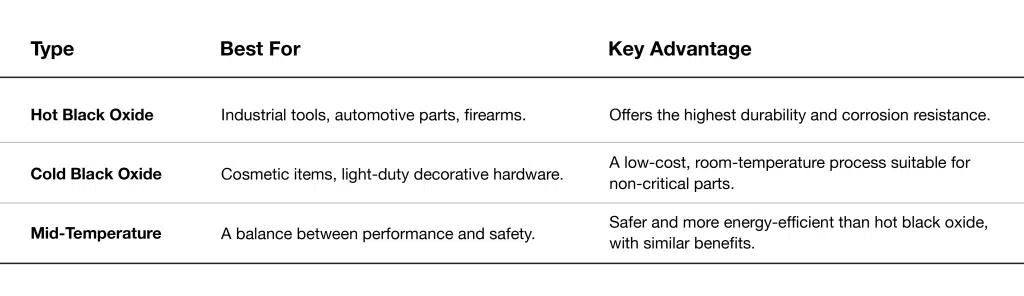
Not all black oxide is created equal. The main difference is temperature, which changes its use and performance.

zone3Dplus table

Why Choose Black Oxide?

This coating is chosen for a powerful combination of practical and visual benefits:

  • Fights Rust:The sealed coating acts as a shield against moisture, significantly boosting corrosion resistance.
  • Looks Professional:It provides a uniform, attractive matte black finish that is highly desired for both tools and consumer products.
  • Improves Grip:The finish is less slippery than bare metal, offering better handling for tools and components.
  • Zero Size Change: The layer is incredibly thin (about 1-2 microns). This means it doesn’t alter the dimensions of precision parts like gears or fasteners.
  • Reduces Glare: The non-reflective surface is perfect for tools and equipment where light reflection could be distracting or dangerous.

Where You'll Find It in Use

Because of these benefits, black oxide is everywhere:

  • Automotive: Under-hood brackets, hinges, and suspension components.
  • Tools & Machinery: Wrenches, drill bits, bearings, and fasteners.
  • Firearms: Barrels, bolts, and frames for protection and a tactical look.
  • Everyday Hardware: Door knobs, locks, and hinges for a durable, stylish finish.

Important Limitations to Consider

However, black oxide isn’t perfect for every situation. It’s important to know its limits:

  • Not for Extreme Conditions: It offers moderate protection. For prolonged exposure to saltwater or harsh chemicals, a coating like zinc plating or galvanization might be better.
  • Can Be Brittle: The coating itself is not flexible. If the metal part bends or is impacted, the coating can crack.
  • Material Limits: It works best on ferrous metals (steel and iron). While specialized processes exist for stainless steel, copper, or aluminum, they are less common.
  • Needs Proper Sealing: Its rust resistance depends heavily on that final oil or wax seal. Without it, protection is minimal.

Black Oxide vs. Other Common Coatings

How does it stack up against the competition? Here’s a quick comparison to help you decide.

zone3Dplus table

Is Black Oxide Right for Your Project?

Choose black oxide coating when you need a sleek, matte-black finish that protects against rust without changing the size of precision metal parts. It is an excellent, cost-effective choice for tools, automotive components, and mechanical parts used in typical indoor or sheltered environments.

Consider a different coating if your part will face constant weathering, chemical exposure, needs to be a different color, or is made from a non-ferrous metal like aluminum.

Ultimately, the best finish depends on your material, budget, and the part’s end use. By understanding the strengths of black oxide, you can make an informed choice that ensures both performance and longevity for your metal components.

Scroll to Top