
3D printing has changed the way people make things. What once took weeks in a machine shop can now happen overnight on a desktop printer. And when it comes to vehicles, that shift is massive. Whether you work in a large factory or build RC cars in your garage, 3D printing opens doors that were not open before.
In this guide, we cover everything you need to know about 3D printing vehicle parts. We look at real-world use in car manufacturing, explore options for RC car builders, dive into impressive projects like printable V8 engines, and show you how to find and create cool 3D car designs. We also cover Hot Wheels printing, part fabrication basics, and how to build a full 3D printed RC car body.
So, whether you are a professional engineer or a weekend hobbyist, this is the guide for you. Let us get into it.
3D Printing in Car Manufacturing
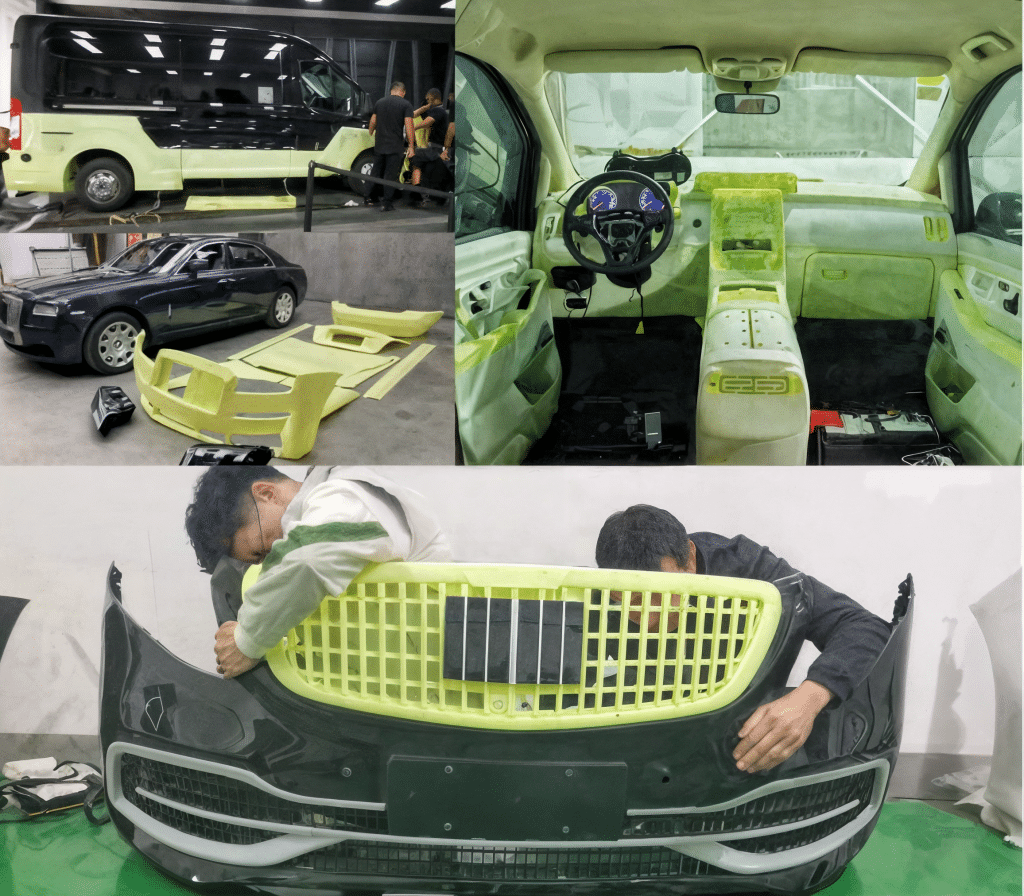
The automotive world was one of the first industries to adopt 3D printing on a large scale. Today, most major car brands use it in some part of their process. The question is no longer whether to use 3D printing, but how much to rely on it.
Car manufacturers use 3D printing mainly for prototyping. Instead of spending money on expensive molds and tooling, engineers print a part, test it, adjust the design, and print it again. This cycle is fast and cheap. As a result, new car models reach the market faster than ever before.
However, production use is growing too. BMW, Ford, Porsche, and others have moved beyond prototypes. They now print end-use parts that go directly into vehicles. These include air ducts, brackets, clamps, and interior trim pieces. Because 3D printing allows complex shapes that are impossible to machine, designers have more freedom.
There are also strong benefits when it comes to spare parts. Old car models often go out of production, and their parts disappear from shelves. With 3D printing, manufacturers and owners can print those parts on demand. This is a huge deal for classic car collectors and fleet managers who need rare components fast.
Furthermore, weight reduction is a key goal in the auto industry. Traditional parts are often heavier than they need to be because of how they are made. 3D-printed parts can use lattice structures and hollow sections that are strong but much lighter. Less weight means better fuel efficiency and faster performance.
Another growing area is jigs and fixtures. These are the tools and holders used on factory assembly lines. They do not go into the car, but they help workers build the car correctly and safely. 3D printing these tools saves time and money compared to machining them from metal or buying them from a supplier.
In short, 3D printing in car manufacturing is not a niche experiment. It is a core tool that saves money, speeds up development, and makes better vehicles.
3D Printed RC Car Parts
RC cars are a perfect match for 3D printing. They are small, they take a lot of abuse, and their parts break often. Fortunately, printing your own replacement or custom parts is easier and more affordable than ever.
The most common reason people print RC car parts is to fix something that broke. A snapped wheel hub, a cracked gear cover, or a bent suspension arm can cost real money to replace from a manufacturer, and shipping can take days. With a 3D printer, you can have a new part ready in an hour or two.
But replacement parts are just the start. Many RC enthusiasts print custom upgrades that make their cars faster, stronger, or more fun. For example, you can design and print a custom motor mount that fits a bigger motor. You can print reinforced suspension arms that resist cracking on rough terrain. You can also create unique wheel designs that look great and grip well.
The materials you choose matter a lot. PLA is easy to print, but it is brittle and weak under stress. For RC car parts, most builders prefer:
- PETG: Tough, flexible, and good in heat. Great for many structural parts.
- TPU: Very flexible. Ideal for bumpers and tires.
- ASA or ABS: More heat-resistant. Good for outdoor use in hot weather.
- Nylon or PA12: Very strong and durable. Used for gears and high-stress parts.
Many free and paid designs are available on sites like Thingiverse, Printables, and Cults3D. You can search by RC car brand or scale. Popular platforms like Traxxas, Axial, and Tamiya have large communities that share designs regularly.
If you have design skills, you can also create your own parts. Programs like Fusion 360, FreeCAD, and Onshape are popular choices. Even beginners can learn to make simple shapes after a few hours of practice.
Overall, 3D printing RC car parts is one of the most practical and rewarding uses of desktop 3D printing. It saves money, it is fun, and it gives you parts that perfectly fit your setup.
3D Printable V8 Engine
One of the most impressive things you can do with a 3D printer and some patience is build a working V8 engine model. These projects are popular with engineers, hobbyists, and anyone who loves the look and sound of a classic V8.
Of course, a 3D printed V8 engine will not power your car. It is a scale model that shows how the engine works. Many designs include moving parts: the pistons go up and down, the crankshaft spins, and the camshaft turns. Some builders even add a small motor so the engine runs on its own, complete with the correct firing order.
These projects are not quick. A full V8 model can have hundreds of parts and take 50 to 100 hours of printing. Assembly takes more time on top of that. However, the result is stunning. A finished, running V8 engine model is a showpiece that attracts attention at any event or display.
Several well-known designs are available online. Some are free, and some require a small purchase. The most popular ones include detailed block designs with removable cylinder heads, full valve train systems, and realistic proportions. Designers who create these models often release update files over time to fix fit issues or improve certain parts.
For best results, print the parts in a neutral color like gray or black, then use hobby paint and clear coat to finish them. Metal paint on the block and heads, red for the intake manifold, and black for the belts give a very convincing look.
A 3D printable V8 engine project is more than a hobby. It teaches you about mechanical linkages, tolerance in design, and how engines actually work. Many people who build one end up with a much deeper understanding of how their real car runs.
Cool 3D Cars
Beyond functional parts, 3D printing is a creative tool for making cool car models and designs that push the limits of what is possible. The community of 3D car designers is large, active, and always sharing new work.
Cool 3D car projects fall into a few categories. First, there are scale models of real cars. These range from rough replicas to highly detailed builds with separate doors, hoods, and interiors. Some designers spend months perfecting a single model to get every curve and proportion right.
Then there are fantasy and concept cars. These are designs that do not exist in the real world. Designers create futuristic shapes, impossible body styles, and wild color schemes that would never make it through a corporate approval process. These are pure art.
Functional desktop models are also very popular. These are small cars with rolling wheels, steerable front axles, and even working suspension. Some use tiny rubber bands as springs. Others include printed gear systems. These projects combine good design with real mechanical function.
For anyone interested in starting, here are some good approaches:
- Browse Thingiverse and Printables for “car body” or “car model” to find starting points.
- Start with a single-piece print to understand the scale and detail level you prefer.
- Move up to multi-part models as your skills grow.
- Join online communities for tips on settings and post-processing.
Post-processing makes a big difference with cool 3D cars. Sanding the surface smooth, priming, and painting with automotive-style paint gives a finish that looks almost real. Some builders add photo-etch details, tinted windows, and tiny LED lights to take things even further.
The creativity here is endless. If you can design it or find a file for it, you can print it. And that is what makes cool 3D car printing so exciting.
Hot Wheels 3D Print
Hot Wheels are one of the most iconic toy car brands in the world. For decades, collectors have chased rare models and custom designs. Now, 3D printing has opened a whole new world for Hot Wheels fans.
There are two main ways people use 3D printing with Hot Wheels. First, they print custom car bodies that fit on a standard Hot Wheels chassis. Because the chassis size is consistent across most models, designers create files that drop right onto an existing base. This means you can have a fully custom car body with the original axles and wheels already in place.
Second, some people print entire Hot Wheels-style cars from scratch. These include the body, interior, wheels, and axles all in one or multiple files. The scale is usually 1:64, which matches the standard Hot Wheels size. These prints can be painted and detailed to look just like a real die-cast car.
The Hot Wheels 3D printing community is very active. On Thingiverse and Printables, you will find hundreds of designs. Popular subjects include muscle cars, race cars, concept vehicles, and custom fantasy designs. Some designers also make accessories like garages, track pieces, and display stands.
For best results, use a high-resolution resin printer for Hot Wheels models. The small size means that FDM printers sometimes struggle to capture fine details. A resin printer gives much sharper lines and smoother surfaces. After printing, clean the part, cure it under UV light, and then paint it.
Hot Wheels 3D printing is also a great entry point for beginners. The models are small, so they print quickly and use little material. The scale makes mistakes less costly. And the results are immediately satisfying. You hold a tiny custom car in your hand, and it looks like something you would find in a toy store.
Whether you are a lifelong collector or just getting into the hobby, Hot Wheels 3D printing is a fun and rewarding place to start.
Part Fabrication with 3D Printing
Part fabrication is the process of making real, functional parts that do a job. In the context of 3D printing, it means using a printer to create components that are installed and used, not just displayed.
3D printing has become a serious fabrication tool because the materials and machines have improved so much. Just a few years ago, most printed parts were too weak for real use. Today, with the right material and the right settings, you can print parts that hold up under load, heat, and stress.
For vehicle part fabrication, here are the key steps:
- Design the part. Use CAD software to create an accurate model. If you are copying an existing part, measure it carefully before you start.
- Choose the right material. Match the material to the job. If the part gets hot, use a high-temperature filament like ASA or PC. If it needs to flex, use TPU. If it needs to be strong, use nylon or carbon fiber-filled filament.
- Set up the print correctly. Use the right layer height, infill percentage, and wall count. For structural parts, use a higher infill (40% or more) and more perimeter walls (3 or more).
- Post-process the part. Sand sharp edges, add thread inserts where needed, and check the fit before installation.
- Test before full use. If possible, test the part under low stress first. Check for cracks or deformation after the initial use.
One important area where 3D printing shines in part fabrication is making parts that are no longer available. Old or rare vehicles often have discontinued components. With a 3D printer and a good design, you can bring those parts back to life.
Another strong use case is making custom brackets, mounts, and housings. These are often not available off the shelf, and machining them in metal is expensive. A printed version in a strong polymer can often do the same job at a fraction of the cost.
Professional fabricators use industrial 3D printers with materials like carbon fiber nylon, ULTEM, and metal. But even hobbyists with a consumer machine can produce useful, reliable parts. The key is knowing the limits of your materials and designing within those limits.
As a result, part fabrication with 3D printing has become a core skill for mechanics, engineers, and car builders. It is not replacing traditional machining, but it is filling a lot of gaps that were hard to fill before.
3D Printed RC Car Body
The car body is one of the most visible and personal parts of any RC car. It protects the electronics underneath and defines how the car looks. With 3D printing, you can design or download a body that is completely unique to your build.
A 3D printed RC car body offers several advantages over a standard polycarbonate shell. First, you can make it any shape you want. Want a body that looks like a vintage muscle car? A futuristic racer? A monster truck with huge fender flares? You can print all of these. Second, you can print in any color or use multiple colors if your printer supports it. Third, printed bodies can be painted, primed, and detailed with decals just like a traditional body.
The main challenge with a printed RC car body is durability. Standard FDM prints can crack or shatter on impact if you use the wrong material. To handle the bumps and crashes that come with RC driving, choose the right filament:
- TPU: The best choice for flexibility. It absorbs impact and bounces back.
- PETG: Tough and light. Good for bodies that need to keep their shape.
- ABS or ASA: Good heat resistance. Works well for outdoor tracks.
It also helps to design the body with some flex built in. Thin walls and smooth curves absorb crashes better than thick, rigid shapes. Adding a small amount of clearance between the body and the chassis prevents cracking from vibration.
Designing an RC car body from scratch is a satisfying challenge. You can take measurements from your chassis and build a body that fits perfectly. Or, if you prefer, many pre-made designs are available on 3D model sites. You can scale them, modify the mount points, and adjust the window size to fit your specific car.
The finish matters too. After printing, sand the body lightly, apply a primer, then paint with spray cans or an airbrush. Use a clear coat to protect the paint and give a glossy finish. Add vinyl decals for numbers, sponsors, or logos. The final result can look just as good as a factory shell.
In the RC car world, a custom 3D printed body is a point of pride. It shows that you did not just buy something off a shelf. You made it. And that makes every race and every run a little more personal.
Final Thoughts
3D printing and vehicles are a natural match. The technology is precise, flexible, and getting more affordable every year. Whether you are a manufacturer looking to cut costs, a mechanic trying to source a rare part, or a hobbyist who loves building and personalizing RC cars, 3D printing gives you tools and freedom that did not exist before.
We have covered a lot of ground in this guide. We looked at 3D printing in car manufacturing, explored the world of 3D printed RC car parts and bodies, marveled at the complexity of a printable V8 engine, browsed cool 3D car designs, got into Hot Wheels printing, and walked through part fabrication basics.
Each of these areas is deep enough for its own guide. But hopefully, this overview has given you a clear picture of what is possible and where to start. The best way to learn is to print something. Pick a project that excites you, download or create a design, and get printing. From there, everything else follows.
The future of vehicle parts is being printed right now. And you can be part of it.
What Files Do You Need for a 3D Printing Quote?
Getting a fast and accurate 3D printing quote starts with one thing: the right file.A good 3D file helps the...
How 3D Printing Helps Reduce Prototype Lead Time
Prototype delays rarely come from one big problem. More often, they come from several small delays stacked together: waiting for...
How to Choose the Right 3D Printing Material for Functional Parts
Choosing the right 3D printing material is one of the most important decisions in any functional part project. A good...