
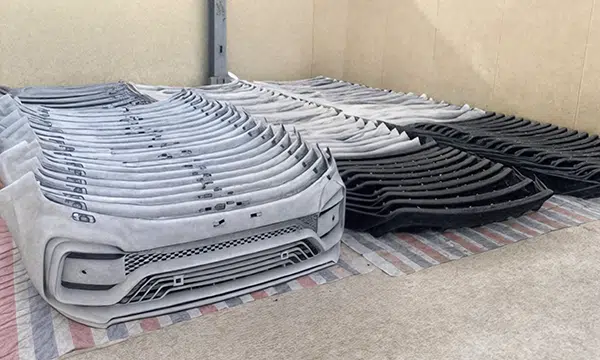
The car industry is changing fast. A big part of that change is happening right now on the factory floor and in the design studio. In fact, 3D printing in car manufacturing has gone from a novel experiment to a core part of how modern vehicles are built. Today, nearly every major car brand uses it in some way.
If you want to understand how 3D printing is used in the automotive industry, the answer is simple: it is everywhere. For example, you can find it in the early design stages, in the tools workers use on the assembly line, and in the actual parts of cars you buy.
This article walks through what is happening right now with 3D printing in the automotive industry. Furthermore, we will look at how companies like zone3Dplus are helping car makers move faster and spend less.
Why the Car Industry Turned to 3D Printing
Car companies have always needed to test new designs before starting mass production. In the past, that meant building expensive molds and tools that took weeks or months to make. If a design changed, the tools had to change too. Consequently, this cost companies a lot of real money and time.
However, 3D printing in car manufacturing changed that model completely. Now, an engineer can design a part on a computer, send it to a printer, and hold a physical model within hours. If the design needs a tweak, you simply update the digital file and print it again. Because of this, there are no new molds, no new tools, and no long waits. As a result, car companies can test more ideas in less time, which leads to better final products.
Beyond prototyping, the benefits are wide-ranging. 3D printing also helps companies:
- Reduce weight:Make cars lighter to improve fuel and battery range.
- Cut costs:Eliminate expensive upfront tooling.
- Create complex parts:Build shapes that were simply impossible to make before.
For instance, a brake duct with complex internal channels can now be printed as a single piece rather than assembled from multiple parts. This means fewer joints, less risk of failure, and a lighter car overall.
3D Printing Technologies Used in Automotive Manufacturing
Different parts need different processes. Therefore, the automotive industry uses nearly every type of 3D printing technology available. Here is a breakdown of the most common ones.
Metal Printing: SLM
Selective Laser Melting (SLM) is one of the most important methods for car makers. This process melts metal powder layer by layer to build parts that are strong enough for real-world use. As a result, aluminum and stainless steel parts made with SLM go into engine brackets, structural supports, and heat-resistant components. This is a key technology for 3D printing in automotive manufacturing.
Resin Printing: SLA
Stereolithography (SLA) uses UV light to cure liquid resin. It produces parts with very smooth surfaces and fine details. Because visual appearance matters, car designers use SLA for interior components and concept models that need to look exactly right before final approval.
Powder Printing: SLS & MJF
- Selective Laser Sintering (SLS):This method sinters nylon powder without melting it fully. The result is a tough, slightly flexible part. Consequently, SLS is popular for functional testing parts like air intakes, ducts, and interior clips.
- Multi Jet Fusion (MJF):This is similar to SLS but faster and more consistent. It produces parts with great mechanical strength and smooth surfaces. Thus, MJF is often chosen for low-to-medium production runs.
For a manufacturing partner like zone3Dplus, offering all of these technologies under one roof provides a clear advantage. Car makers and their suppliers can work with a single expert for every stage of the process, from the first prototype to the final production run.
Real-World Applications of 3D Printing in the Car Industry
Today, 3D printing shows up in nearly every part of a car company’s day-to-day operations. Here are the main areas where it makes a major difference.
1. 3D Printing for Automotive Prototypes
Design prototyping is where it all started. Engineers use 3D printing for automotive prototypes to check how a part looks, fits, and works before any metal is cut. A dashboard bracket, a door handle mechanism, or a tail light housing can all be printed and tested in days rather than weeks. This speed means design flaws are caught early when they are still cheap to fix.
2. End-Use Parts
End-use parts are growing fast. In fact, some car companies now install 3D printed parts directly into vehicles that customers buy. These are often small, complex components that would be too expensive or difficult to make any other way.
3. Customization and Limited Editions
When a car brand wants to offer a special edition model or a custom trim package, 3D printing makes it affordable. Since there is no need for a large production run, you print only what you need, exactly when you need it.
4. Spare Parts for Older Models
When a car model is discontinued, its parts eventually become hard to find. Fortunately, with 3D printing, manufacturers and dealers can print a replacement part on demand. This extends the life of older vehicles and keeps classic car owners happy.
5. Jigs and Fixtures
These are the tools, guides, and supports that help workers build cars accurately and safely. While they do not go into the car itself, they are essential on every assembly line. Printing these tools is much faster and cheaper than machining them from metal. Plus, they can be updated quickly when production needs change.
Benefits for Automotive Suppliers and Part Makers
It is not just the major car brands that benefit from 3D printing. Suppliers and independent part makers also gain a great deal.
- Lower Upfront Costs:Traditional manufacturing requires expensive molds. For a small supplier making custom parts, those costs can be a major barrier to entry. With 3D printing, you can start production with zero mold costs.
- Faster Turnaround:When a car company needs a prototype part reviewed within a week, a traditional supplier may struggle. However, a supplier with 3D printing capabilities can deliver in days, building stronger trust with clients.
- Design Freedom:Some part shapes are too difficult to make with old methods. 3D printing removes those limits, giving car designers more creative options to work with.
How zone3Dplus Supports the Automotive Industry
If you are looking to bring these benefits to your business, zone3Dplus is a premier manufacturing partner that works across the entire automotive supply chain. Based in Shanghai with global operations in both China and the United States, they offer a full range of 3D printing, CNC machining, and vacuum casting services. You can explore their full capabilities at www.zone3dplus.com.
One of the key strengths of zone3Dplus is their massive range of printing technologies. They work with SLM, SLA, SLS, MJF, Polyjet, and Binder Jetting across more than 30 metal and plastic materials.
Advanced Metal Capabilities
For automotive applications, their SLM metal printing capabilities truly stand out:
- Aluminum (AlSi10Mg):A popular choice for lightweight structural and thermal components.
- 316L Stainless Steel:Used for heavy-duty parts that must withstand wear, pressure, and fluid exposure.
Plastic & Rapid Prototyping
Meanwhile, their SLA and SLS services are perfect for interior trim prototypes and functional testing. For instance, Nylon 12 parts printed with SLS offer excellent impact resistance and long-term durability, which are vital for automotive use.
Why Work with zone3Dplus?
- No Minimum Order Quantity (MOQ):Car makers often need just one or two parts for testing. While traditional factories turn down these small tasks, zone3Dplus handles them as standard practice.
- Certified Quality:All parts go through a strict two-stage quality control process. Additionally, zone3Dplus holds an ISO 9001 certification, giving car companies the formal quality assurance they require.
- Instant Quoting:Their online system helps clients get accurate pricing and lead times fast, so projects never stall.
Challenges and What to Watch For
Despite all of this progress, 3D printing still has a few limits to keep in mind.
First, scale remains the biggest hurdle. For mass-produced parts that require millions of units, traditional injection molding is still faster and cheaper per part. Therefore, 3D printing makes the most sense for low-to-medium volumes, custom designs, and prototypes.
Second, while material options are growing, they do not cover every single automotive need yet. Some parts require unique traits like high flame resistance or specific UV stability. Because of this, you must always check that your chosen material meets the proper automotive certifications before use.
Looking Ahead
In conclusion, the role of 3D printing in car manufacturing will only grow from here. As print speeds increase, material choices expand, and costs drop, more parts of the car industry will shift toward additive manufacturing.
For car brands, suppliers, and independent part makers, now is the time to build expertise. Working with an experienced global partner like zone3Dplus can help you choose the right technology for each part and integrate 3D printing into your current workflow smoothly.
Whether you need to prototype a new component or source a low-volume production run, 3D printing is ready to deliver.

What Files Do You Need for a 3D Printing Quote?
Getting a fast and accurate 3D printing quote starts with one thing: the right file.A good 3D file helps the...

How 3D Printing Helps Reduce Prototype Lead Time
Prototype delays rarely come from one big problem. More often, they come from several small delays stacked together: waiting for...

How to Choose the Right 3D Printing Material for Functional Parts
Choosing the right 3D printing material is one of the most important decisions in any functional part project. A good...